
FHA Condominium Approval Guidelines
Review the criteria on Blackstone’s published checklist, along with insurance, reserve, leasing, and special-project considerations.
Basic criteria to review
The figures below reflect the criteria stated on Blackstone’s existing FHA guidelines page. Some entries refer to dated rule changes, so verify them against current HUD policy.
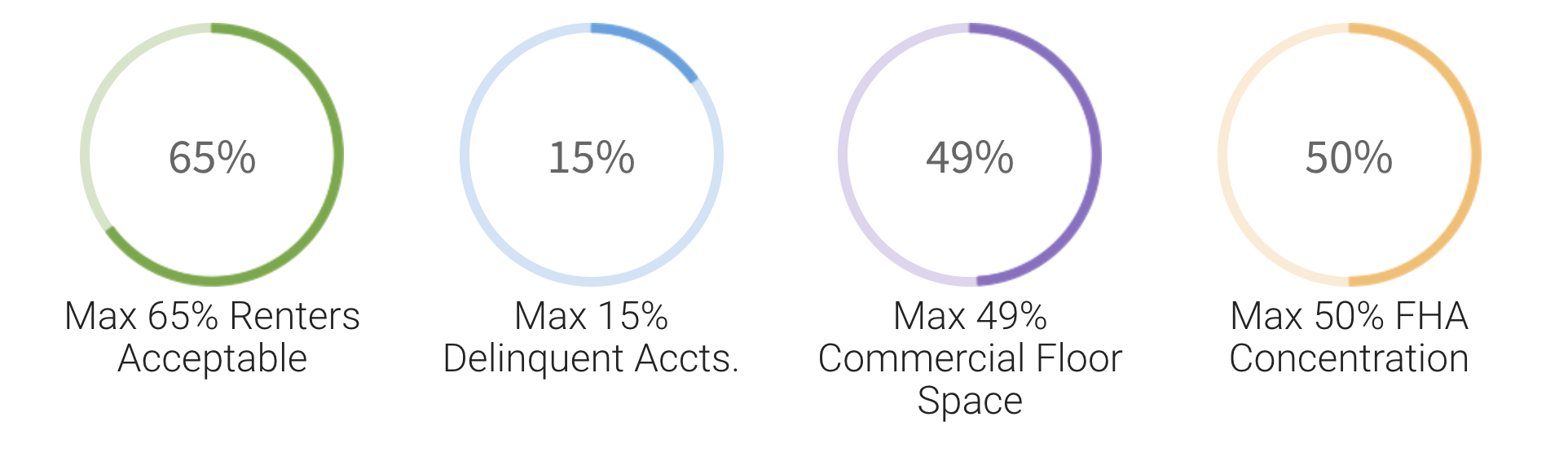
The published checklist says no more than 50% of units can be investor-owned or rented. Its October 26, 2016 note describes a possible 35% owner-occupancy exception (up to 65% rentals) with additional conditions, including three years of stable finances, low delinquency, and a current reserve study.
The published checklist sets a maximum of 50% of the property used as commercial space.
The published checklist says no more than 15% of units can be over 60 days delinquent in association assessments.
For projects with more than 20 units, it lists no more than 10% ownership by one investor, entity, or related party. For projects of 20 units or fewer, it lists no more than one unit for each such owner or related party. The page identifies this as an October 15, 2019 rule.
The published checklist lists no more than 50% of units with FHA loans in the community.
Reserve requirements
Blackstone’s published checklist calls for at least 10% of budgeted income to be allocated to reserves, as well as adequate reserve funding.
Annual funding
At least 10% of all budgeted income goes toward a reserve account, according to the current page.
Available funds
Blackstone’s described review looks for enough reserves to cover insurance deductibles and capital repairs and replacements expected over the next two years, informed by a recent reserve study.
Insurance requirements
Review the association’s actual policies and declarations with your insurance professional and the FHA reviewer.
Master or blanket policy
The published checklist calls for 100% of condominium replacement cost, excluding foundation and land.
General liability
Coverage for common elements and public ways is listed on the current page.
Fidelity / crime coverage
The current page lists coverage for communities with 20 or more units, addressing those handling association funds. It lists three months of aggregate assessments plus reserves, and notes that this differs from directors and officers coverage.
Flood insurance
The published checklist calls for flood coverage when the property is in a 100-year floodplain. It describes NFIP coverage at 100% of replacement cost.

Leasing restrictions
Blackstone’s existing guidance groups leasing provisions into three categories. Confirm current treatment with the reviewer before changing governing documents.
Listed as acceptable
- No leasing restrictions in the governing documents (“silent”).
- Caps limiting the number of rentals.
- A requirement to provide the board with a copy of the lease.
- Written leases.
- Tenant names and addresses supplied to management or the board.
- A requirement that leases comply with association governing documents.
- Minimum or maximum lease periods.
- A minimum lease of 30 days or language prohibiting transient rentals.
Listed as sometimes acceptable
- Assignment of rental income to the association if the owner is delinquent in assessments.
- Corporate leasing restrictions.
- A requirement to use a community-specific lease form.
Listed as unacceptable
- Mandatory board meetings with potential tenants, other than a nonmandatory community orientation.
- Requiring an owner to check the registered sex offender list before leasing.
- A community-wide leasing ban; the page says at least one unit must be eligible to lease.
- Ownership “seasoning” periods before an owner may lease.
- Board or HOA lease approval except clearly recorded approval limited to monitoring rental counts.
- Accommodations associated with hotels, such as maid or front desk service.
- Board power to void a lease.
- HOA-mandated tenant credit references or criminal background checks; the published page distinguishes checks an individual owner may request.
Special cases
Small projects and new construction have additional considerations described on Blackstone’s page.
Condominiums with 2–4 units
Very small associations may have few shared expenses and may lack a community bank account, formal budget, or financial reports. The published page describes a Memorandum of Understanding as an alternative for certain such communities.
The memorandum defines each owner’s maintenance duties. The page says each owner signs it, it is recorded with the county, and an in-state attorney should prepare it. It quotes an estimated attorney cost of $200–$500 and says that an accepted memorandum may replace financial-report and reserve submissions for qualifying projects.
Confirm whether this route is available for the particular project and verify current attorney costs.
New or recently converted construction
The published page says a project under construction, recently converted, or less than 12 months old follows additional FHA guidelines. It lists at least 30% of Phase 1 units under contract or presold before Blackstone can proceed.
It also notes additional materials beyond the document list for established projects, including environmental reports, site photographs, and permits.
The existing page quotes a $1,500 total fee, states that it is nonrefundable, and says Blackstone will continue working with the project until it is approved. Verify the current scope, fee, and terms directly with Blackstone before applying.

How the application works
The current page describes a three-step path for property managers and board members.

Complete the questionnaire
A property manager or board member submits an eligibility questionnaire for review against FHA condo approval guidelines.

Identify issues
Blackstone reviews the application for potential conflicts and recommends possible fixes.

Submit to FHA
Blackstone prepares and submits the application on your behalf. If approved, the certificate is sent to you.
The current page gives a 2–4 week approval estimate here and a 2–3 week process estimate elsewhere. Ask Blackstone for a current estimate for your project; approval depends on the reviewer.
Get started →Ready to review your community?
Start the request and confirm current criteria, pricing, and timing for your project.