



Cold snaps can freeze pipes quickly—especially in exterior walls, unheated areas, and spaces with drafts. Use the
practical tips below to help reduce the risk of frozen pipes and water damage.
When water freezes, it expands. That expansion can crack or burst piping—often in hidden areas—leading to leaks,
flooding, and costly repairs. Taking a few preventative steps now can help avoid major damage later.
Quick prevention checklist
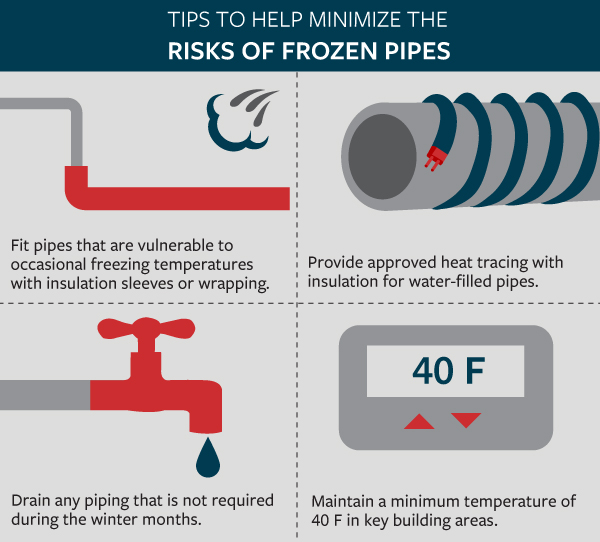
1) Insulate vulnerable piping
Pipes in garages, crawl spaces, attics, exterior walls, and near drafty openings are most at risk. Consider adding
insulation sleeves or wrapping to exposed piping where appropriate.
2) Use approved heat tracing (when applicable)
In certain situations, approved heat tracing paired with insulation can help protect water-filled
piping. Always follow manufacturer instructions and any building/association requirements—improper installation can
create safety hazards.
3) Drain lines that aren’t needed in winter
If you have seasonal or unused water lines (for example, certain exterior supply lines), draining them before and
during winter months can reduce freeze risk. When in doubt, consult a licensed plumber.
4) Maintain a minimum temperature of 40°F in key areas
Keep thermostats set to at least 40°F in critical building areas—especially in rooms with
plumbing on exterior walls and in areas above unheated spaces. If you’ll be away, don’t turn the heat off.
Extra steps that help during extreme cold
- Seal drafts: Close and latch windows/doors; add weatherstripping where drafts are present.
- Open interior cabinet doors: Let warmer air circulate around plumbing under sinks (especially on exterior walls).
- Know your shutoff: Identify your main water shutoff valve location now—before an emergency.
- Check vulnerable areas: Keep an eye on garages, basements, and mechanical rooms during prolonged cold spells.
If you suspect a pipe is frozen
- Act quickly. If water flow slows to a trickle or stops, a freeze may be forming.
- Warm the area safely. Increase heat in the room and open cabinet doors. Avoid open flames.
If you’re unsure, contact a licensed plumber. - Watch for leaks. As pipes thaw, cracks can release water—check nearby walls, ceilings, and floors.
- Report immediately if in a managed community. If you see active leaking, notify management/emergency maintenance right away.
Stay informed during winter weather
For winter updates, community-specific notices, and helpful resources, visit:
https://blackstoneam.com/snow